Cleaning an Alcantara steering wheel: grippy again, not greasy
Daniel von Detailing1 |


Koch-Chemie
Ceramic Body "Cb0.01" Ceramic Coating
Provides up to 36 months of long-term paint protection and deep shine


Koch-Chemie
Ceramic Allround "C0.02" Ceramic Coating
High-quality ceramic coating for long-lasting protection and shine
SONAX
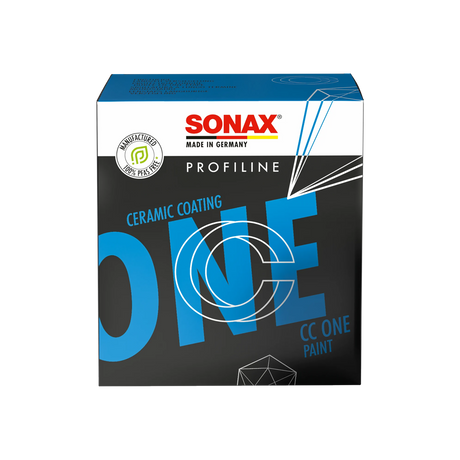
PROFILINE CeramicCoating "CC" One (Paint) ceramic coating
CeramicCoating CC One (Paint) — SiO2 ceramic sealant

SONAX
PROFILINE CeramicCoating "CC" Evo (Two-Step) Ceramic Coating
CeramicCoating CC Evo — Two-Stage Ceramic up to 5 Years

SONAX
PROFILINE CeramicCoating "CC" Pro (Paint) ceramic coating
CeramicCoating CC Pro — Single-Step Ceramic Coating up to 4 Years


GYEON
Q² Mohs EVO Paint Coating Ceramic Coating for Paintwork
Ceramic Coating for Paint – hard, glossy, durable


GYEON
Q² One EVO Paint Coating ceramic sealant for paintwork
Forgiving Ceramic Coating – Professional Protection for Beginners


GYEON
Q² CanCoat EVO Ceramic Coating Spray Sealant
Ceramic protection from a spray bottle – easy, durable, high gloss


Meguiars
ULTIMATE Ceramic Coating Kit Ceramic Sealant
Ceramic coating for a perfect finish


GYEON
Q² Matte EVO Paint Coating — Ceramic Sealant for Matte Paint
Matte paint ceramic protection, no gloss effect – durable, UV-stable


Meguiars
Ultimate Ceramic Coating Ceramic Sealant
Professional ceramic coating for DIY application — easy & long-lasting


GYEON
Q² Pure EVO Paint Coating Ceramic Sealant for Paint
Ceramic coating with maximum optical clarity – colorfast
What is a ceramic coating? A liquid coating that reacts with humidity after application and cures on the clear coat into a hard, water-repellent layer. Depending on the product, manufacturers quote up to five years of durability under their maintenance conditions. It doesn't make paint scratch-proof and doesn't replace stone-chip protection film.
Ceramic coatings, also known as ceramic paint protection, are reactive silicon-based paint sealants. How they're set apart from other protection products depends on the specific formula and the manufacturer's instructions. The film crosslinks in the hours after application and anchors itself in the top layer of the paint. That's why prep, temperature and curing time decide the result, not the label. Single-layer, two-stage and sprayable coatings differ in build-up, application and each manufacturer's durability claims.
Detailing1's tip from the shop: An opened coating bottle reacts with air, and crystals form on the rim. Koch-Chemie explicitly points this out for the Cb0.01: if you don't wipe them off, you rub them into the fresh paint with the applicator. So wipe the bottle neck clean before every top-up, and don't count on an opened bottle for next year, since the manufacturer says it keeps for six months at most once opened.
A ceramic coating forms a hard, slick protective layer on car paint that water beads off and dirt struggles to stick to, making later washes easier.
The reason lies in the chemistry. Many coatings work with polysilazanes, and GYEON names them explicitly for the GYEON Q² Mohs EVO Paint Coating. These are building blocks of silicon and nitrogen that react with humidity and bond into a dense network of silicon and oxygen, chemically close to glass. What that means for you: the protective layer doesn't form in the bottle but on your paint, and only in the hours after application.
For setting them apart, the specific formula is what counts. SONAX puts it like this: with ceramic and hybrid sealants, chemical processes take place on and in the paint after application, and the film anchors itself in the top layer of the paint. With products from our wax sealant range, durability depends on the formula: SONAX quotes weeks for natural waxes and several months for a polymer sealant.
The word ceramic on the label doesn't decide much. In the paint sealant test by AUTO BILD and KÜS, a spray wax came out ahead of the ceramic sprays. Spray products were tested, not curing coatings, so the finding doesn't apply to this category. It still shows what matters: design and application. Whether nano or ceramic is the better term, we cover under nano sealants.
You see the layer at the first rain. With beading, water pulls into round droplets, with sheeting it runs off as a continuous film. Both show the surface is doing its job. How long it keeps doing so, though, you can't tell from the beading on day one.
In terms of build-up, ceramic coatings split into single-layer coatings, systems with separate base and top layers, and combined products that merge both functions into one application.
Single-layer coatings are the direct route. The Koch-Chemie Ceramic Body "Cb0.01", the GYEON Q² One EVO Paint Coating and the SONAX PROFILINE CeramicCoating "CC" Pro (Paint) get by with one bottle. According to the manufacturers, that's good for up to four years with the CC Pro and up to 36 months with the Cb0.01. A second layer of Cb0.01 is possible after about 30 minutes, depending on temperature and humidity.
The classic paint coatings are grouped under ceramic coatings for paint.
Two-stage systems separate base and top layer. The GYEON Q² Syncro EVO Paint Coating combines a hard base layer with a top layer that has to follow within the manufacturer's time window. With the CC Evo, SONAX works with BaseCoat and GlossCoat. You'll need to plan for the separate steps accordingly. For the CC Evo, SONAX quotes up to five years of durability with regular maintenance.
The INNOVACAR "SINH" Hybrid Coat, on the other hand, combines the functions of base and top layer in one product. According to the manufacturer, a single application step is enough.
Then there are special cases with their own page. Top coats for ceramic coatings are top layers on an existing coating. You spray the GYEON Q² CanCoat EVO Ceramic Coating into the microfibre cloth away from the car, spread it over a small area and then wipe off the excess. GYEON quotes up to twelve months of durability, depending on maintenance and climate. The spray versions are collected under ceramic coatings for spraying.
With matt paint, the approval of the specific product decides: GYEON allows the Mohs EVO on matt surfaces, but not the GYEON Q² Pure EVO Paint Coating. With the CanCoat EVO, the manufacturer says a slight satin effect can occur. Products designed specifically for matt are under ceramic coating for matt paint.
Coatings with graphene content are under graphene ceramic coating. We explain there what sets them apart from a good ceramic layer in everyday use.
Which ceramic coating suits your car best depends on how forgiving it is, the approved surfaces, the application window and the manufacturer's durability claim.
The 9H figure comes from the pencil hardness test. Leads of known hardness are pushed at an angle across the coating, and 9H is the hardest level on the scale. That doesn't prove any scratch resistance in the car wash. Coating manufacturer Gtechniq puts the gain on the scale at two to three levels and the thickness of its layer at around one micrometre.
SONAX is even more direct: hardness isn't a quality feature of a sealant. What matters more is elasticity, so the layer moves with the paint and doesn't turn brittle. What that means for you: don't compare coatings by the hardness number on the bottle. That's also why a ceramic coating doesn't make car paint invulnerable.
Three other criteria hold up better. Manufacturer durability ranges from up to one year of beading with the Meguiars Ultimate Ceramic Coating to five years with the CC Evo. These are maximum figures under the respective maintenance and usage conditions. On forgiveness: GYEON describes the One EVO as forgiving and built for beginners. On surfaces: Koch-Chemie approves the C0.02 for plastic and wheels too, and the Cb0.01 for painted surfaces.
Then there's the application window. SONAX states at least 10 °C for the CC Evo; GYEON recommends 15 to 25 °C for outdoor application of its EVO coatings, and with the Cb0.01 curing takes longer below 15 °C. So if you want to coat under a carport in spring, don't pick the coating with the biggest number of years, pick the one whose window fits your spot and the season.
Many searches about cost are really asking whether to DIY or hand it to a detailer. If you leave the ceramic coating to a professional detailer, you're mainly paying for the prep and their experience at wiping off. If you do it yourself, you need time, good light and a dry spot under cover for curing.
When applying a ceramic coating, most of the time goes into washing, decontamination, polishing and degreasing, because a ceramic layer doesn't remove existing paint defects.
Swirls and holograms don't disappear under a coating, they get locked in. Where they bother you, polishing comes first. For its Ultimate Ceramic Coating, Meguiars lists washing and chemical decontamination as mandatory and polishing as optional, but necessary with oxidation or water spots. The paint shows you how far you need to go under raking light. The steps in detail are in our guide to prep.
After that, the paint has to be grease-free. A panel wipe, meaning a degreaser that removes polish and oil residue, is part of the job, found under paint degreaser. We've also been asked whether a coating bonds on residue from a polish with polymer content. A panel wipe removes fresh residue, but not a cured polymer sealant completely. That's what sealant remover is for.
You apply section by section with an applicator from the coating applicators category. After the product-specific flash time, you wipe off the excess with one of the coating cloths. With the Cb0.01, that time depends on temperature and humidity. Check every section under raking light for high spots, meaning darker, blotchy patches with too much coating. Correct them within the wipe-off window the manufacturer specifies.
Then the layer needs rest. Koch-Chemie states nine days until the first wash for the Cb0.01, and below 15 °C curing takes longer. GYEON requires 12 hours without water; for outdoor application the manufacturer recommends 15 to 25 °C. Searches for ceramic coatings pick up every year from February, when it's often too cold outside. Plan the date by the thermometer, not the calendar.
On your first car, allow enough time to judge flashing and wiping off on small areas. Keep checking under raking light whether the section looks even before you move on to the next one.
The ceramic range at Detailing1 is mainly Koch-Chemie, GYEON and SONAX, rounded off with Meguiars, INNOVACAR and ZviZZer, each with its own focus on surface, build-up and ease of entry.
Koch-Chemie splits clearly by surface. The C0.02 is the all-round coating for paint, plastic and wheels in a 75 ml bottle, while the Cb0.01 focuses on painted surfaces and can be applied in two layers. According to the manufacturer, it's also suitable for motorhomes, caravans and boats. Both are the best-selling coatings in this category.
GYEON builds its Q² line as a tiered model. The One EVO is the entry point with a forgiving formula. The GYEON Q² Mohs EVO Paint Coating is the flagship of the line. GYEON recommends 15 to 25 °C for outdoor application; avoid direct sun. The Pure EVO is another single-layer option, the Syncro EVO the two-stage build-up, and for matt paint there's the GYEON Q² Matte EVO Paint Coating.
In its PROFILINE, SONAX carries a single-layer and a two-stage coating, CC Pro and CC Evo, each with pads in the kit. Meguiars goes the home-user route with the Ultimate Ceramic Coating: spray on, spread, wipe off. INNOVACAR adds a pure top layer with the INNOVACAR "SINH" Top Coat, and for the ZviZZer Paint Ceramic Coat the manufacturer quotes 30 to 36 months.
We haven't found any independent comparison tests for curing coatings, so we don't quote test scores here. Our assessment follows the manufacturers' figures and what customers ask us about prep and curing.
A ceramic coating pays off when the paint is new or freshly polished and you have time for careful prep, application and the curing that follows.
If the paint is new or freshly polished, go for a coating. If swirls show up under raking light, polish first, then seal. If you're short on time or a dry spot, rinse-off sealants fit into a normal wash and a spray sealant into an afternoon. If stone chips are the issue, paint protection film is the option. A coating doesn't replace it and doesn't make the paint scratch-proof either.
You should know the limits beforehand. A ceramic coating doesn't put maintenance on autopilot: you still wash, and water spots remain an issue, especially on dark paint. If you polish out scratches later, you take the coating off at that spot too. Cured high spots may call for another polish and then a fresh application on the affected area.
How to wash and refresh an existing layer is under coating care. The overview of all sealant types, from wax to ceramic, is under Lacquer sealing. A ceramic coating suits drivers who want to prep their paint thoroughly, stick to the application window and maintain it regularly afterwards.
Thorough degreasing, the right application temperature and undisturbed curing lay the groundwork for a durable layer. The manufacturer's durability figures are still maximum values under specific conditions, not a guarantee for your car. Wear and later maintenance influence how long the coating keeps its properties.
Too much choice in Ceramic coatings? Get help picking:
Add Detailing1 as a preferred source on GoogleA ceramic coating is a liquid coating that hardens into a solid, water-repellent layer after application on the paintwork. It makes cleaning easier but does not eliminate existing paint defects. The paint does not become scratch-resistant as a result, and the thin coating is no substitute for a paint protection film (PPF).
Yes, provided you can follow the preparation steps and the manufacturer's instructions. You need a dry place under cover, good lighting, and suitable temperatures. Wash, decontaminate, and degrease the paint, and polish it beforehand if necessary. Apply the coating section by section, remove the excess in time, and observe the curing period.
That depends on the surface and the application process. The GYEON Q² One EVO Paint Coating is a single-step product and is reportedly forgiving to use according to the manufacturer. The SONAX PROFILINE CeramicCoating "CC" Evo (two-step) separates the base and top layer. Therefore, compare the application process, approved surfaces, and working conditions; a high hardness rating alone does not make a product a better choice.
Only if the manufacturer has approved the specific product for it. GYEON allows the GYEON Q² Mohs EVO Paint Coating on matte paint but excludes matte surfaces for the GYEON Q² Pure EVO Paint Coating. The GYEON Q² CanCoat EVO Ceramic Coating is approved, but it can slightly satinize the finish.
Follow the maintenance instructions for your coating: GYEON excludes automatic car washes for its coatings. Furthermore, the mandatory curing time must pass before the first wash. For Koch-Chemie Ceramic Body "Cb0.01", this is at least nine days. A ceramic layer does not make the paint scratch-proof; Koch-Chemie recommends hand washing for maintenance.
The total price depends on whether you apply it yourself or hire a professional detailer. For DIY application, costs include the coating, preparation, and accessories; with a professional, labor costs are added. For Koch-Chemie Ceramic Body "Cb0.01", the manufacturer specifies about 15 to 30 ml per vehicle. Therefore, compare the total scope of services rather than just the bottle price.
Daniel von Detailing1 |

Daniel von Detailing1 |

Daniel von Detailing1 |

Daniel von Detailing1 |

Daniel von Detailing1 |

Daniel von Detailing1 |

Daniel von Detailing1 |

Daniel von Detailing1 |

Daniel von Detailing1 |

Daniel von Detailing1 |

Daniel von Detailing1 |

Daniel von Detailing1 |