




Dried-On Water Spots on Your Car: Acid or Polish?
Daniel von Detailing1 |


SONAX PROFILINE LeatherCareFoam Leather Care (Foam) - 400 ml is on backorder. As soon as everything in your order is back in stock, we ship it all in one go — delivery time follows whichever item takes longest.
— Currently Sold Out
Item added to your cart.
View cart


Do you have any questions or need help?
We are sure that our help page will help you. There you will find information on how to contact us and the relevant answers to frequently asked questions.
Didn't find what you were looking for? Write us a message in the chat.
Shipping to Austria from 6,90 € with Österreichischer Post, DPD or FedEx, delivery time 1-4 days. Orders from 179 € ship free with DPD.
All shipping methods, weight tiers and express options are listed in our shipping policy.
Car Care Store in Nordhorn
Why wait when you can get it fast? Order your car care products from us online and choose between convenient pickup or our lightning-fast delivery, whether locally or throughout Europe. We are dedicated to offering you maximum flexibility and convenience so your car always stays in top condition.
You can always pick up your order from Tuesday to Friday, 10:00 to 17:00, at Bosinks Kamp 8 in 48531 Nordhorn at Detailing1. Please have your pickup confirmation ready. We look forward to your visit.
Couldn't load pickup availability
What does a leather care foam do that a care milk doesn't? The foam spreads the conditioning agents evenly and works deep into the leather surface as you rub it in — targeted moisture care without heavy residue sitting on top.
Leather inside a car has a hard life: direct sun through the windscreen, the temperature swing between summer and winter running, the mechanical stress of getting in, sitting and leaning — over time all of that pulls moisture and suppleness out of the material. The SONAX PROFILINE LeatherCareFoam is a leather care foam in a 400 ml can that feeds moisture into smooth leather in car interiors, holds on to its natural elasticity and shields the surface from the usual causes of premature ageing. And because it goes on as a foam, it's easier than milk or cream products to spread the conditioning agents evenly across the whole area.
Detailing1's tip from the shop: Always run the LeatherCareFoam after a proper clean with the SONAX PROFILINE LeatherCleaner — dirt, body oils and seat residue on the leather would block the conditioning agents and stop them working evenly. Spray the foam onto a clean microfibre cloth rather than straight onto the leather; that gives you more control over how much goes on and keeps excess out of seams and perforations.
Leather care products differ fundamentally in their consistency and in how that consistency behaves in use. A care cream clings hard to the surface and needs a lot of working in; a care milk is more fluid and spreads fast, but can go on unevenly over textured surfaces. A care foam brings together the best of both: it stays where you put it without running, while still letting you work it softly across larger areas. The SONAX PROFILINE LeatherCareFoam uses that foam behaviour to release the conditioning agents evenly onto the leather.
The conditioning agents in the LeatherCareFoam are tuned to what car leather seats, door cards and steering wheels actually need. Leather is a natural material with an open-pore structure that loses moisture over time. Products like the LeatherCareFoam put that moisture back and keep the leather fibre pliable — much like a skin cream does for human skin. The formula is built for smooth leather, the finished surface fitted in most modern car interiors.
One thing that sets professional leather products apart is that they leave behind no film-forming substances that seal the leather over time and stop the material breathing. The PROFILINE line sticks to formulas that condition the leather without sealing it — that keeps the natural feel and look that make a leather interior what it is.
Colour compatibility is another point. The LeatherCareFoam formula is set up so it won't shift the colour on light or dark leather. On very light or white leather it's still worth doing a small test patch in a hidden spot to make sure there's no unwanted change in tone — that goes for every leather care product, whoever makes it. Used properly, the LeatherCareFoam works on all the common leather colours in car interiors.
Before the actual leather clean, it's worth a quick look at the overall state of the interior. Seat-heating wires inside the leather can be damaged by aggressive scrubbing — but the LeatherCareFoam only needs gentle, pressure-free working in, so with correct use there's no risk to seat heaters. What does matter is not leaving the leather damp for long: after conditioning, air the car out briefly with the doors or windows open so the moisture component you applied soaks in rather than condensing.
Cleaning the leather is the step that makes or breaks the result. Dirt, sweat and body oils work their way into the surface over time and build a barrier the conditioning agents can't get through. A cleaning pass beforehand with a suitable leather cleaner makes sure the LeatherCareFoam can act right on the leather itself. For heavily soiled leather, go two-stage: a deep clean with a foam cleaner first, then conditioning with the LeatherCareFoam.
The application itself is straightforward: spray the foam onto a soft microfibre cloth, not straight onto the leather. That keeps excess out of seams and perforations and gives you better control over how much goes on. Work the foam gently into the surface with the cloth in circular motions — don't press, glide. After a short two-to-three-minute dwell, take off any excess with a dry microfibre and buff the surface. The result is an evenly conditioned, lightly satin-matte leather with no greasy film or oily patches.
How often you condition depends on how hard the leather gets used. The driver's seat and steering wheel want doing every four to six weeks, since they take daily friction and body heat. The passenger seat and rear bench often get by with conditioning every two to three months. Cars that sit in the sun for long stretches benefit from more frequent care, because UV speeds up the drying process.
A common mistake is laying on too much product at once. More foam doesn't mean more conditioning — the leather can only take up so much active ingredient. Excess that doesn't soak into the material sits on top and can look blotchy once it dries, or create friction. Three to four pumps onto a microfibre cloth is usually enough for a driver's seat; if the leather is clearly dried out, a second thin coat after the first has fully soaked in can make sense. The main thing is repeating it regularly — frequent light care beats the occasional soak with big amounts of product.
Leather around the vents or close to the air-conditioning outlets dries out faster than the rest, because the constant airflow pulls the moisture out. Those spots deserve a bit of extra attention every time you condition and benefit from a slightly more generous coat of LeatherCareFoam.
Not everything that looks like leather in a car interior is real leather. Faux leather, PU coatings and Alcantara-style microfibre materials are widely used today as an alternative to the real thing. The LeatherCareFoam is designed for genuine smooth leather; on faux leather and PU surfaces it usually does no harm, but it won't give a comparable conditioning effect, because those materials have no living fibre structure that needs to take up moisture. When in doubt, a test patch in a hidden spot tells you a lot: real leather takes moisture up readily, faux leather makes it bead. On real-leather steering wheels regular care matters even more, because your palms transfer body oils and dirt onto the material every time you drive.
On freshly cleaned leather the effects show up straight away once the LeatherCareFoam goes on: the colour looks richer, the grain stands out more clearly and the surface feels more supple. On leather that's cared for regularly the difference after a single pass is subtler, but it's there — the routine holds the level instead of catching up on neglect.
The LeatherCareFoam is made for smooth leather, the typical finished surface in car interiors. With perforated leather, be careful about applying it directly: foam or liquid that gets into the perforations can leave stains on the padding underneath. The advice to spray the product onto the cloth rather than straight onto the leather solves that almost entirely. For suede and Alcantara the LeatherCareFoam isn't the right choice — those materials need care products built specifically for textile or microfibre.
Seasonal care is another thing that often gets underrated even among pros. In winter the interior temperature drops hard — leather goes stiffer in the cold and loses moisture faster to the dry heater air. In summer it's heat and UV that stress the material. A solid round of care in spring before summer and in autumn before winter gives the leather a good baseline for whichever season is about to hit it hardest.
On badly dried-out or already cracked leather, a single pass of the LeatherCareFoam can't undo the damage completely — the care routine should have started sooner. In those cases, several intensive applications help slow the damage down, but a full restoration of deeply cracked leather needs more specialised leather-restoration products or professional leather work.
The SONAX PROFILINE range has several leather products with different jobs. The SONAX PROFILINE LeatherProtection leans more towards protection and is meant for leather that's already in good, cared-for shape and needs shielding from outside factors like moisture and dirt. The LeatherCareFoam, on the other hand, is mainly about moisture and suppleness — it's the nourishing step that goes on before the protectant. For a complete leather treatment, pair the two: LeatherCareFoam first for the base care, then LeatherProtection for the protection.
When you buy a used car, the state of the leather is a good indicator of its care history. Dry, faded, cracked leather tells you there's been no regular upkeep. With a consistent programme of cleaning plus LeatherCareFoam, the leather can often be improved a lot — something dealers and reconditioners can use to lift a car's value before sale.
A further thought concerns the grade of leather in the car. High-grade full-grain leather — the kind fitted in premium cars — is more sensitive to film-forming products and responds best to light, frequent care. Split leather and coated leather, common in mid-range cars, is tougher and tolerates a more concentrated application too. The LeatherCareFoam suits both grades, as long as you keep the amount you apply sensible.
Compared with the SONAX XTREME LederPflegeSchaum, the PROFILINE LeatherCareFoam is the professional version with a higher concentration of active ingredients. The PROFILINE line is built for continuous commercial use, where product consistency and repeatable results are what count. For the occasional user at home the XTREME LederPflegeSchaum is more than enough; anyone conditioning several cars a day picks the PROFILINE version for more dependable results.
The SONAX PROFILINE LeatherCareFoam is the base product for any professional leather care workflow. Dealerships that recondition cars in house run it as their standard product for every leather-equipped interior. Detailing businesses that regularly work on premium-segment cars value the reliable effect and the easy handling, which keeps quality consistent even across many cars a day. For private owners of leather-trimmed cars who want to get the most out of their interior, the LeatherCareFoam is a dependable product for the regular routine.
How often leather really needs conditioning ties closely to the car's daily life. A commercially run taxi or hire car at full daily load needs a care interval of four to six weeks. A private car driven every day gets by with conditioning every two to three months. Rarely used classics or collector cars are best cared for before storage and after they're brought back out, since long stints standing still speed up the leather drying out. Clear per-car care records make sense in fleet operations, so no leather interval gets missed.
The full leather care workflow for a leather-trimmed car looks like this: a proper clean with SONAX PROFILINE LeatherCleaner, then moisture care with the LeatherCareFoam, optionally finished with SONAX PROFILINE LeatherProtection as a protective layer. This three-step approach brings both fresh and already-aged leather into optimal condition. As a verified SONAX specialist dealer, Detailing1 keeps the PROFILINE LeatherCareFoam permanently in stock and advises on request about the right product combination for specific leather types. For businesses offering a full interior clean as a service, the LeatherCareFoam is a reliable building block of the leather care workflow, giving customers visible results the moment they get the car back: leather that looks as if the car just rolled out of the showroom — with no over-the-top gloss or sticky residue. That's the difference between a simple clean and a professional detail that wins customers over and brings them back.
Not sure about SONAX PROFILINE LeatherCareFoam Leather Care (Foam)? Get it explained:
Add Detailing1 as a preferred source on GoogleEconomical cleaning and care foam for smooth leather.
Shake can well. Spray foam thinly or apply to a SONAX Microfiber Cloth soft touch (04510000). Spread evenly and thinly over the entire surface. Do not apply to hot surfaces and test for colorfastness and abrasion resistance in a small, inconspicuous area beforehand. Allow to dry for a few minutes, then polish. To prevent the spray head from sticking, spray it empty upside down after each use. Not suitable for velour, aniline, nubuck and suede.
PROFILINE Leather Care Foam is suitable for the following surfaces: leather, interior.
PROFILINE Leather Care Foam is available from Detailing1 in the container size 400 ml.
The main advantages of PROFILINE Leather Care Foam: silicone-free, suitable for all leather colors, suitable for perforated leather, suitable for leather with seat heating.
Safety information for SONAX PROFILINE LeatherCareFoam Leather Care (Foam)
Approved for private customers
This product, marked “Approved for private customers”, is packaged, declared, registered and certified for private customers under German law. Please observe the hazard and precautionary statements.
Danger

Flammable
| Extremely flammable aerosol. | H222 |
| Keep away from heat, hot surfaces, sparks, open flames and other ignition sources. No smoking. | P210 |
This product information is intended only as non-binding advice. No liability on our part can be derived from it. Please check whether the product is suitable for your application. Test for suitability and compatibility before use. We are happy to advise you.
Questions about this information?
Contact
SONAX GmbH
Münchener Str. 75, 86633 Neuburg an der Donau, Deutschland
+498431530
info@sonax.de
sonax.de
Choose from many payment methods such as PayPal, eps, Klarna, Apple Pay, Mastercard or Visa and benefit from pay later and instalment options. Your payment details are always processed securely. Questions about payment?
Your order reaches you from 6,90 € in 1-4 days with Österreichischer Post, DPD or FedEx. Orders from 179 € ship free with DPD. Questions about shipping?

SONAX
Acid-free wheel cleaner with color change for all rim types

SONAX
XTREME Ceramic Spray Sealant Spray-On Sealant
Ceramic Spray Sealant — 4 Months Protection, Si-Carbon
SONAX
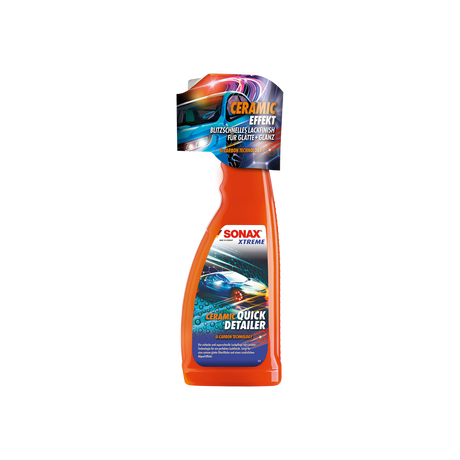
XTREME Ceramic QuickDetailer Quick-Detailer
Ceramic Quick Detailer — Ceramic Detailer with Si-Carbon Protection


SONAX
PROFILINE MultiStar "All-Purpose-Cleaner" Universal Cleaner
MultiStar - Universal Cleaner Concentrate


SONAX
PROFILINE ActiFoam "Energy" Cleaning Foam (Snow Foam)
pH-neutral snow foam cleaner for contactless pre-wash
SONAX
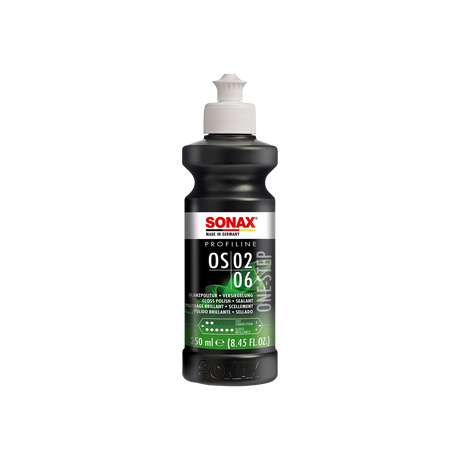
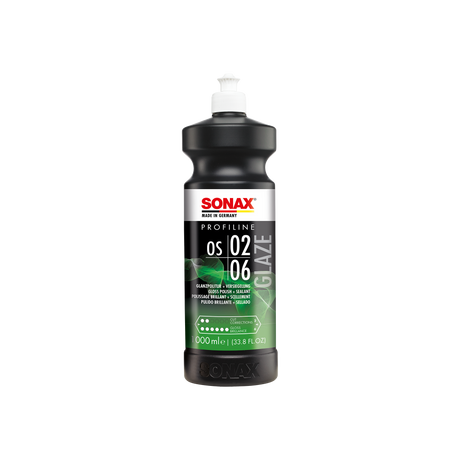
PROFILINE OS "02-06" High-Gloss Polish with Sealant (One-Step)
OS 02-06 — High-Gloss Polish with Sealant (One-Step)

SONAX
XTREME ReifenGlanzGel "Ultra Wet Look" Tyre Care
Tyre gloss gel "Ultra Wet Look" – tyre dressing with a deep high gloss
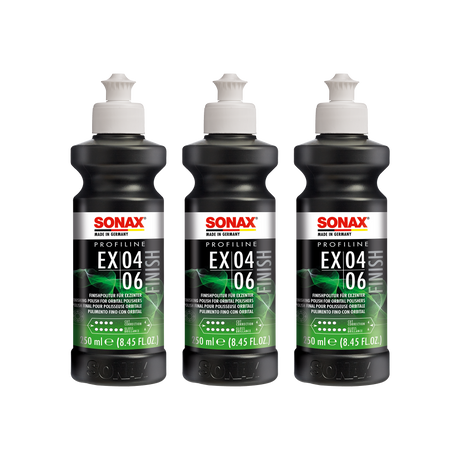
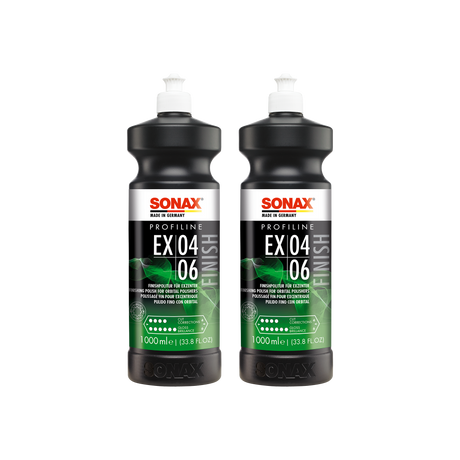
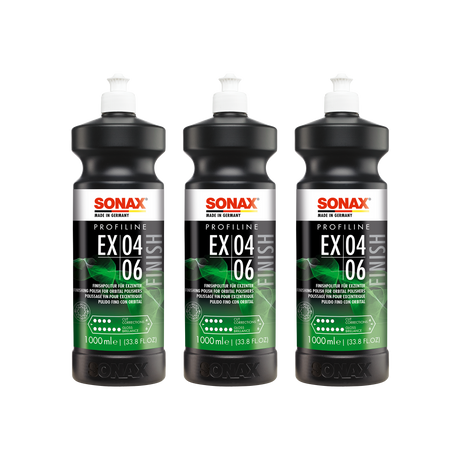
SONAX
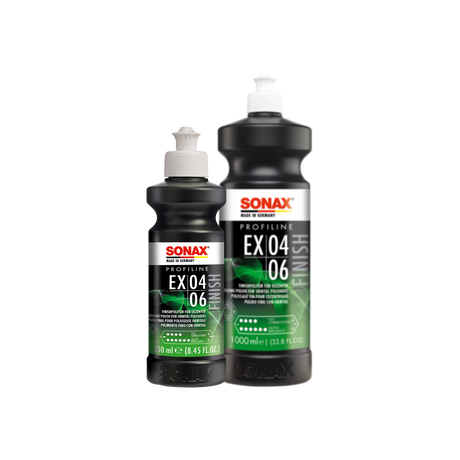
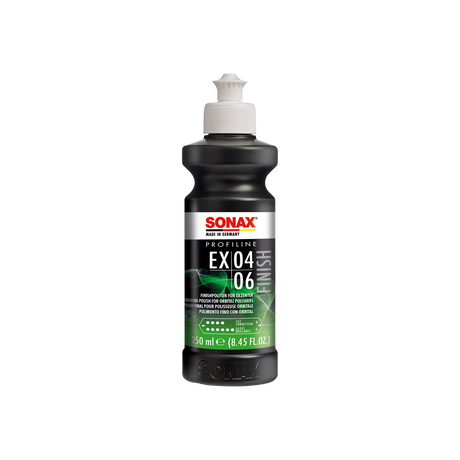
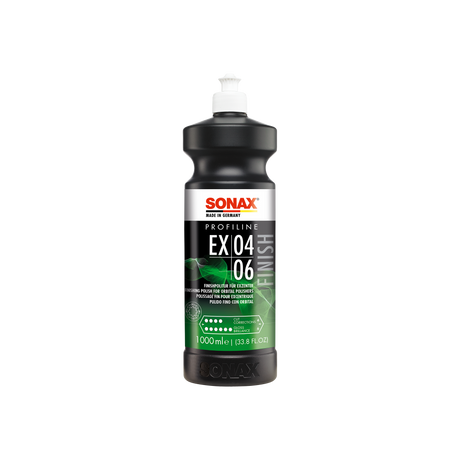
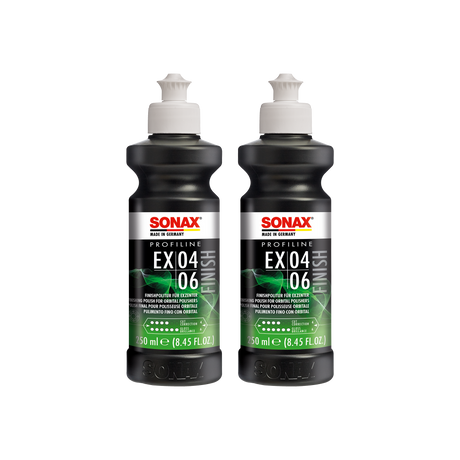
PROFILINE EX "04-06" High-Gloss Polish (Finish)
Silicone-oil-free, low-dust high-gloss polish for DA polishers


SONAX
PROFILINE Prepare Cleaner & Inspection Spray (Degreaser)
Prepare — Degreaser & Control Spray before Sealants


SONAX
XTREME Ceramic Tyre+Wheel Detailer Quick-Detailer
2-in-1 Ceramic Care: Cleans, protects, and conditions tires and rims


SONAX
XTREME Film Cleaner Special Cleaner for Wraps
Film Cleaner — Special Cleaner for PPF, Vinyl, and Matte Paint


SONAX
PROFILINE LeatherCleaner (foam cleaner)
LeatherCleaner — Professional Leather Cleaner (Foam Cleaner)
Daniel von Detailing1 |

Daniel von Detailing1 |

Daniel von Detailing1 |

Daniel von Detailing1 |

Daniel von Detailing1 |

Jasper von Detailing1 |

Daniel von Detailing1 |

Daniel von Detailing1 |

Jasper von Detailing1 |

Daniel von Detailing1 |

Daniel von Detailing1 |

Daniel von Detailing1 |