





Loading...
Koch-Chemie × COLOURLOCK COLOURLOCK "Leather Colour" Leather Dye for Surface-Pigmented Smooth Leather 250ml
Pre-order
27,72€
Contents: 250mlUnit price (110,88€
/ l)
Unavailable
incl. 20 % VAT, plus shipping, calculated at checkout
Koch-Chemie × COLOURLOCK COLOURLOCK "Leather Colour" Leather Dye for Surface-Pigmented Smooth Leather - White / 250ml is on backorder. As soon as everything in your order is back in stock, we ship it all in one go — delivery time follows whichever item takes longest.
Pre-order
Item added to your cart.
View cart
Shipping & payment methods
Schnellbestellung
Water-based leather dye for smooth leather in 32 OEM colors
Water-based leather dye for smooth leather in 32 OEM colors
Questions and help
Questions and help
Do you have any questions or need help?
We are sure that our help page will help you. There you will find information on how to contact us and the relevant answers to frequently asked questions.
Didn't find what you were looking for? Write us a message in the chat.
shipping
shipping
Shipping to Austria from 6,90 € with Österreichischer Post, DPD or FedEx, delivery time 1-4 days. Orders from 179 € ship free with DPD.
All shipping methods, weight tiers and express options are listed in our shipping policy.
Store pickup
Store pickup
Car Care Store in Nordhorn
Why wait when you can get it fast? Order your car care products from us online and choose between convenient pickup or our lightning-fast delivery, whether locally or throughout Europe. We are dedicated to offering you maximum flexibility and convenience so your car always stays in top condition.
You can always pick up your order from Tuesday to Friday, 10:00 to 17:00, at Bosinks Kamp 8 in 48531 Nordhorn at Detailing1. Please have your pickup confirmation ready. We look forward to your visit.
Couldn't load pickup availability

Koch-Chemie × COLOURLOCKCOLOURLOCK "Leather Colour" Leather Dye for Surface-Pigmented Smooth Leather White / 250ml
Pre-order
27,72€
Contents: 250mlUnit price (110,88€
/ l)
Unavailable
Leather dye for worn smooth leather in the OEM shade
What is COLOURLOCK Leather Colour? A water-based leather dye for refreshing surface-pigmented smooth leather in cars and on furniture. 32 shades from black and havana to bright pink and metallic effects, in 100 ml, 250 ml and 1 litre. Not suitable for aniline, nubuck or suede, and it's no crack repair — that's what Fluid Leather is for.
COLOURLOCK Leather Colour is a water-based leather dye from Koch-Chemie × COLOURLOCK for pigmented, surface-dyed smooth leather in cars and furniture. For decades the product was known as "Leder Fresh"; since Koch-Chemie took it over it goes by Leather Colour internationally. The water-based polymer blend dries to a thin, elastic colour film that bonds straight into the leather's existing pigment layer. What that means for you: no rigid coat of paint sitting on top, but a flexible colour bond that moves with every shift on the seat and won't crack.
- OEM colour match by VIN or colour code from 32 standard shades. The range covers the most common car and furniture colours — from black and tar black through havana, caramel and chocolate to red-brown, bordeaux, fir green, deep blue and violet. On top of that, seven bright colours (bright yellow, bright green, bright orange, bright pink, bright red) and five metallics in gold, silver, copper, brass and pearl. BMW Dakota, Mercedes Nappa, Audi Valcona and Porsche Club can usually be matched straight from this palette with no custom mix — an edge that cheap rivals just don't give you.
- Scales from the steering wheel up to a full interior. A 250 ml bottle, dabbed on with a sponge, is good for roughly four to six worn steering wheels or two yellowed seat bolsters. The 1 litre bottle is built for upholsterers and reconditioners — with a compressed-air sprayer and a reactive hardener it covers about a full saloon interior, seats and door cards included. The 100 ml size is the metallic and bright-colour format for creative accents or smaller design areas.
- Touch-dry after 5 to 10 minutes of hot-air drying, but only fully load-bearing after about 30 hours. This is the most important number in the whole guide. Sit down in light jeans the next morning and you'll rip open yesterday's work — the colour film needs the whole following day to build its final bond with the leather. Respect the 30 hours and you get a surface that shrugs off years of jeans abrasion in one go.
Day-to-day from Detailing1: We see one mistake all the time that kills any leather dye on the spot — reaching for brake cleaner as a supposedly thorough degreaser on a heavily soiled steering wheel. Brake cleaner is a highly aggressive solvent mix. It doesn't just strip the skin oils, it wrecks the tanning deep in the leather fibre. After that the substrate is gone for good.
What we see day-to-day: no colour system on earth — neither Leather Colour nor rivals like Ledermax or Leather Expert — gets any grip on that. The polymer bond needs an intact pigment layer as an anchor. Once that's etched away, the colour flakes off after a few days. With a 5-euro brake cleaner you've done leather damage on the scale of a full re-trim. We've seen it more than once, and every time it's final.
The only right way to degrease runs in two clean steps. First a deep-pore pre-wash with COLOURLOCK Leather Cleaner and a soft leather brush worked into the grain. Then leather-grade naphtha (not methylated spirit, not acetone, not brake cleaner) until the surface is dead matt and a white microfibre cloth picks up no more colour. Only then does the dye go on.
Dabbing, spraying, airbrushing with the leather dye
You never lay the leather dye down as one thick coat, but in several wafer-thin layers with a light sand between them. A steering wheel typically takes three to four such layers, a fully yellowed seat bolster four to six. Try to get full coverage in one go and you'll end up with a rubbery, rough surface that feels like brushed-on paint — which is exactly what Leather Colour is not meant to be.
In the DIY dabbing method you put a few drops of COLOURLOCK Leather Colour straight onto the sponge — never onto the leather. Then you dab from seam to seam in small circular micro-movements, evenly thin, no puddles. Between each layer, warm it for 5 to 10 minutes with a hairdryer on a medium setting. This forced drying is not optional. What that means for you: the heat pulls the polymer chains into a clean bond. On room air alone the film takes too long to close and the result stays patchy.
After the heat comes a 30-second sand with the leather sanding pad in 4000 grit, and a microfibre wipe after that. That way the colour builds a calm, satin-matt film that traces the grain instead of clogging it up.
In the pro workflow the dye goes on with a compressed-air gun or airbrush with a fine nozzle — above all on full seat sets or door cards, where dabbing would take days. Here the crosslinker from the COLOURLOCK range comes in at a low dose. In plain terms: a reactive hardener that ties extra bonds into the colour film and makes the surface far more abrasion-resistant.
What matters is the pot life after mixing — that's a few hours, after which the blend in the cup is useless. So if you work with hardener, you mix only as much as you'll actually spray straight away.
Working temperature sits at 18 to 24 degrees. Below 15 degrees the dye won't cure reliably; above 30 the surface skins over before the colour film has pulled deep enough into the grain. In a cold garage in winter the rule is: preheat for at least an hour — the seats and the bottle.
What Leather Colour can do and where Fluid Leather takes over
Leather Colour is a pure colour refresh for intact or lightly worn smooth leather — not an all-round repair fix. It turns a matt, yellowed seat back into an OEM-clean surface, but it can't fill cracks and can't structurally rebuild a seat that's sat through.
On surface-pigmented smooth leather with an intact pigment layer (BMW Dakota, Mercedes Nappa, Audi Valcona, Porsche Club, standard aniline with a sealer) the dye builds the film perfectly. On pigmented synthetic leathers like Mediflex or most OEM faux leathers it works too — here the crosslinker helps for maximum durability. On hard interior plastics you can use the dye with the matching Plastics Primer as a bonding base, say to touch up cockpit trims, door handles or controls colour-wise.
Off limits, on the other hand, are aniline leather with no pigment layer, nubuck and suede. These leathers are open-pored — the dye seals up the natural breathability, kills the hand feel and turns soft aniline into a stiff, plastic-like surface. If your seat still feels warm and soft and soaks up water droplets instead of beading them off, Leather Colour is the wrong product.
Here only the aniline products from the same range help, such as COLOURLOCK Aniline & Nubuck Cleaner followed by aniline cream. On bycast and pure PU leather the dye won't form a stable bond either and flakes off after days.
Deep cracks, sat-through bolsters with the padding showing — that's not a colour problem, it's a structural one. Brush dye over that and you're pouring water into a crater. The right order: first work COLOURLOCK Fluid Leather into the crack as a filler, smooth it with the GLD pen and let it set. Only then does Leather Colour go on top as the colour finish. The two products are complementary, not interchangeable.
The simple if-then logic: if the seat is structurally sound and only the colour looks worn → Leather Colour. If the seat shows cracks or exposed padding → Fluid Leather first, then Leather Colour. If the seat is aniline or nubuck leather → no leather dye, but aniline care and accepting the patina.
Who buys 100 ml, who 250 ml, who 1 litre
The size tells you straight away which league you're working in. The 100 ml bottle comes only in the metallic-effect colours (brass, gold, copper, pearl, silver) and the bright colours — special shades for accents on steering-wheel spokes, lettering or design seats. One bottle covers several small detail areas or a complete steering wheel in a special colour.
The 250 ml bottle is the standard format for hobby users. A steering wheel or a yellowed seat bolster is covered without any worry — four to six steering wheels or two to three bolsters is realistic, depending on the number of layers and how thirsty the substrate is. It covers 25 of the 32 standard shades, from black and havana through to the big colour classics and the metallic effects.
The 1 litre bottle is the pro format for upholsterers, smart-repair outfits and ambitious detailers refreshing whole interiors. With a compressed-air sprayer and hardener, 1 litre is good for about a full saloon interior, seats and door cards. Per square metre of seat surface the material cost stays well below comparable pre-mixed sets from Ledermax or Geist, because here a concentrate is scaled up rather than a ready-made application solution.
But the real value only shows up through the whole range behind it. Detailing1 carries the complete leather care line from COLOURLOCK: leather-grade naphtha for degreasing, Leather Cleaner Mild and Strong for the pre-wash, the leather sanding pad for the intermediate sand, Fluid Leather for cracks, Leather Shield for the final seal. Without that stack the dye delivers only a fraction of its durability — the life of the job hangs about 80 percent on the prep. Buy the bottle on its own and you dye once and curse the flaking a week later.
And one pro trick the manufacturer's brochure won't print: on UV-faded seats the original OEM colour code often no longer matches exactly. Experienced users then hand-mix two or three neighbouring shades from the 32-strong range with a pipette — until a test spot in a hidden place (the underside of the seat, say) matches perfectly. That's fifteen minutes of trial and it saves the whole custom-mix order, which otherwise quickly means several weeks' wait.
The second pro rule is mundane but it costs most hobby users their work: 30 hours of curing at room temperature is non-negotiable. The first 10 minutes of hot-air drying only build the visible film. The material reaches full mechanical strength only the next day — sit on it sooner and you rip open yesterday's work.
Not sure about Koch-Chemie × COLOURLOCK COLOURLOCK "Leather Colour" Leather Dye for Surface-Pigmented Smooth Leather? Get it explained:
Frequently Asked Questions about COLOURLOCK Leather Colour
What is COLOURLOCK Leather Colour?
The COLOURLOCK Leather Colour (historically known as Leather Fresh) is a water-based leather dye from Koch-Chemie × COLOURLOCK for pigmented, surface-dyed smooth leather. It dries to a thin, elastic color film that bonds directly with the existing pigment finish of the leather. Available in 32 shades from black and Havana to bright colors and metallic effects.
How do you dye car leather with Leather Colour?
In three phases: first, pre-wash and degrease with leather cleaning spirit (never brake cleaner), then apply the color to the sponge and dab in thin layers from seam to seam. Between each layer, blow-dry and sand with a 4000 grit pad. Three to four layers per steering wheel, four to six for a yellowed seat bolster. Then allow 30 hours to cure before sitting on it again.
What is the difference between Leather Colour and Fluid Leather?
Leather Colour is a pure color refresh as a thin, elastic color film. COLOURLOCK Fluid Leather is a tinted filler that structurally fills deep cracks and sagging bolsters. Sequence: first Fluid Leather for structural repair, then Leather Colour for color finishing. Both products are complementary, not interchangeable.
Does Leather Colour work on aniline leather or nubuck?
No. Aniline leather, nubuck, and suede are open-pored — the color will block their natural breathability and destroy the feel. Bycast and pure PU leather also do not form a stable bond; the film flakes off after a few days. The color is exclusively suitable for pigmented, surface-dyed smooth leather with an intact pigment finish. The simple test: Water drops bead off — suitable. Water drops soak in — not suitable.
What happens if you apply too thickly or sit on it too soon?
If applied too thickly, a rough, rubber-like surface will form, which can only be manually smoothed with a 4000 grit sanding pad — the color will then feel like painted-on lacquer. If you sit on it with light-colored trousers before 30 hours of curing, you will tear the uncured color film and transfer discoloration to the fabric. Both errors necessitate a complete reapplication.
How much does a 250 ml bottle of Leather Colour cover?
Using the DIY dabbing method, a 250 ml bottle is sufficient for about four to six steering wheels or two to three yellowed seat bolsters, depending on the number of layers and the absorbency of the substrate. The 1-liter bottle is the professional size and, with an airbrush gun and crosslinker, covers approximately a complete limousine interior including seats and door panels. The 100 ml size is only available for metallic and bright colors as an accent size.
Just ask us. Daniel will help you.
Application of COLOURLOCK Leather Colour
Preparation, Film Build-up, Curing – Three Phases
Preparation accounts for approximately 80 percent of the durability. First, a deep pore pre-wash with COLOURLOCK Leather Cleaner and a soft leather brush into the grain. Then, thoroughly degrease with leather cleaning spirit until the white microfiber cloth no longer picks up any discoloration. Brake cleaner, acetone, and methylated spirits permanently destroy the leather fibers and are taboo.
Fill cracks and worn bolsters beforehand with COLOURLOCK Fluid Leather, smooth them, and allow to dry. Gently buff rough areas with a 4000 grit leather sanding pad. The color will only bond properly on a matte, grease-free, and intact surface.
Apply the color to the sponge – never directly to the leather – and dab it on in several thin layers from seam to seam. Between each layer, blow-dry for 5 to 10 minutes with hot air on a medium setting, then follow with 30 seconds of intermediate sanding using a pad and microfiber wiper. Three to four layers per steering wheel, four to six for a yellowed seat bolster. In a professional workflow, use an airbrush with a small amount of COLOURLOCK Crosslinker – only mix as much as you will use immediately, as the hardener will set in the cup after a few hours.
After the final layer, allow it to rest for 30 hours at approximately 24 degrees room temperature before the seat is used again. Anyone who tries sitting on it with light-colored trousers beforehand will undo yesterday's work. Afterwards, seal with COLOURLOCK Leather Shield to prevent jeans abrasion and UV exposure.
Notes: Not suitable for aniline leather, nubuck, suede, Bycast or pure PU leather – these types of leather will clump or cause the color to peel. Fill deep cracks with Fluid Leather first – Leather Colour is a color refresh, not a structural repair. Processing temperature 18 to 24 degrees. Below 15 degrees, the color does not bond reliably; above 30 degrees, the surface dries too quickly. Store frost-free between 5 and 30 degrees, shelf life approx. 24 months after opening. Complete safety and hazard information can be found on the label and in the safety data sheet upon request.
Safety information for Koch-Chemie × COLOURLOCK COLOURLOCK "Leather Colour" Leather Dye for Surface-Pigmented Smooth Leather
Material composition
2,4,7,9-tetramethyldec-5-yne-4,7-diol (CAS 126-86-3, EC 204-809-1) — 0.1 – < 1 %, 1,2-benzisothiazol-3(2H)-one (CAS 2634-33-5, EC 220-120-9) — < 0.05 %, 2-methylisothiazol-3(2H)-one (CAS 2682-20-4, EC 220-239-6) — < 0.0015 %, reaction mass of 5-chloro-2-methyl-2H-isothiazol-3-one and 2-methyl-2H-isothiazol-3-one (3:1) (CAS 55965-84-9, EC 911-418-6) — < 0.0015 %, Ethane-1,2-diol (CAS 107-21-1, EC 203-473-3) — 0.1 – < 1 %, Triethylamine (CAS 121-44-8, EC 204-469-4) — 0.1 – < 1 %, C.I.BASIC VIOLET 11:1 (CAS 73398-89-7, EC 277-459-0) — 0.1 – < 1 %, and Pyrithione zinc (CAS 13463-41-7, EC 236-671-3) — < 0.1 %
Warning

Harmful
| May cause an allergic skin reaction. | H317 |
| Harmful to aquatic life with long lasting effects. | H412 |
| If medical advice is needed, have product container or label at hand. | P101 |
| Keep out of reach of children. | P102 |
| Read carefully and follow all instructions. | P103 |
| Avoid breathing dust/fume/gas/mist/vapours/spray. | P261 |
| Contaminated work clothing should not be allowed out of the workplace. | P272 |
| Avoid release to the environment. | P273 |
| Wear protective gloves/protective clothing/eye protection/face protection. | P280 |
| IF ON SKIN: Wash with plenty of water. | P302+P352 |
| Specific treatment (see … on this label). | P321 |
| If skin irritation or rash occurs: Get medical advice/attention. | P333+P313 |
| Take off contaminated clothing and wash it before reuse. | P362+P364 |
| Dispose of contents/container to an approved waste disposal plant. | P501 |
| Contains 2,4,7,9-tetramethyldec-5-yne-4,7-diol, 1,2-benzisothiazol-3(2H)-one, 2-methylisothiazol-3(2H)-one, reaction mass of 5-chloro-2-methyl-2H-isothiazol-3-one and 2-methyl-2H-isothiazol-3-one (3:1), 1,2-benzisothiazolin-3-one. May produce an allergic reaction. | EUH208 |
| Safety data sheet available on request. | EUH210 |
VOC content
19.91 % — proportion of volatile organic compounds.
This product information is intended only as non-binding advice. No liability on our part can be derived from it. Please check whether the product is suitable for your application. Test for suitability and compatibility before use. We are happy to advise you.
Questions about this information?
More about Koch-Chemie
More about Koch-Chemie
Contact
Koch‑Chemie GmbH
Einsteinstr. 42, 59423 Unna, Deutschland
+492303986700
info@koch-chemie.com
koch-chemie.com
Specifications
Specifications
Ausführung
-
Inhalt250 ml
-
ArtikelnummerD1-KCX-563-250ML-01
-
EAN-
-
Gewicht1 kg
Produkt
-
Hersteller
-
ProdukttypLeather dye
-
Kategorie
Legal guarantee
Legal guarantee
payment
💳 Secure payment
Choose from many payment methods such as PayPal, eps, Klarna, Apple Pay, Mastercard or Visa and benefit from pay later and instalment options. Your payment details are always processed securely. Questions about payment?
📦 Fast shipping
Your order reaches you from 6,90 € in 1-4 days with Österreichischer Post, DPD or FedEx. Orders from 179 € ship free with DPD. Questions about shipping?
More on this in the guide
View all
Discover Koch-Chemie × COLOURLOCK
View all
-
Koch-Chemie
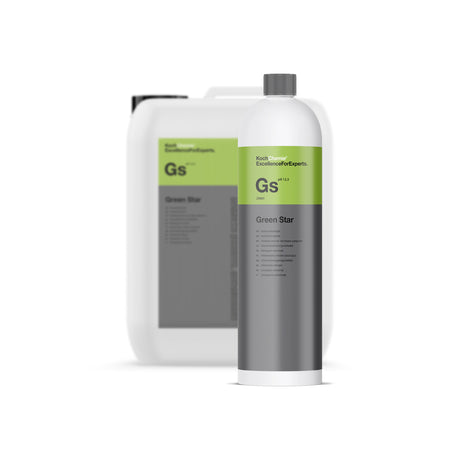
Green Star "Gs" Universal Cleaner
Highly alkaline APC concentrate for workshops, engine bays and lifts
Backordered (24× 1000 ml / 1 liter · 10× 5 liters)Pre-order (11kg · 22kg)From 7,75€Contents: 1000mlUnit price (7,75€ / l)Unavailable -


Koch-Chemie
Spray Head "Star" (28/400) CHS-3AN by Canyon
Chemical spray head for 28/400 bottles with stepless nozzle
In stock (73 units)5,53€Contents: 1 pieceUnit price (5,53€ / piece)Unavailable -
Koch-Chemie
Top Star "Ts" Interior Plastic Care
Silicone-free Plastic Care with UV Protection and Silk-Matte Finish
In stock (17× 1000 ml / 1 liter)Backordered (1× 10 liters)From 19,40€21,06€Contents: 1000mlUnit price (19,40€ / l)Unavailable -
Koch-Chemie
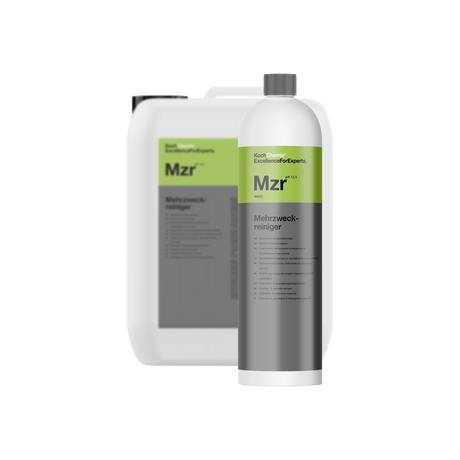
Multi-Purpose Cleaner "Mzr" All-Purpose Cleaner
Alkaline cleaner concentrate with pH 12.5 and Daimler approval
In stock (24× 1000 ml / 1 liter)Backordered (2× 11kg)Pre-order (21kg)From 9,97€Contents: 1000mlUnit price (9,97€ / l)Unavailable -
Koch-Chemie
Vorreiniger B "Vb" Pre-Cleaner
Alkaline pre-cleaner for car and truck pre-washing, VDA-compliant
In stock (19× 1000 ml / 1 liter · 1× 5kg · 2× 11kg)Pre-order (22kg)From 7,75€Contents: 1000mlUnit price (7,75€ / l)Unavailable -
Koch-Chemie
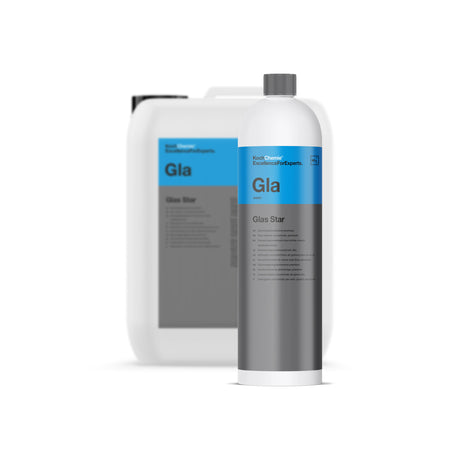
Glas Star "Gla" Glass Cleaner Concentrate
Concentrated alcohol-based glass cleaner with Daimler approval
In stock (22× 1000 ml / 1 liter)Backordered (1× 10 liters)Pre-order (20 liters)From 8,87€Contents: 1000mlUnit price (8,87€ / l)Unavailable -
Koch-Chemie
Cleans thoroughly and gently, preserves the shine of the paint surface
In stock (13× 1000 ml / 1 liter · 2× 10 liters)Pre-order (21kg)From 7,75€Contents: 1000mlUnit price (7,75€ / l)Unavailable -
Koch-Chemie
Reactive Rust Remover "Rrr" iron fallout remover
Maximum cleaning performance for flawless results without compromise
In stock (18× 500 ml · 1× 5kg)Pre-order (11kg)From 16,07€17,74€Contents: 500mlUnit price (32,14€ / l)Unavailable -
Koch-Chemie
Teerwäsche A "Tea" Bitumen & Tar Remover
Perfect bitumen and tar removers for a flawless finish
In stock (15× 1000 ml / 1 liter)Pre-order (10 liters · 20 liters)From 9,97€Contents: 1000mlUnit price (9,97€ / l)Unavailable -
Koch-Chemie
Leather Star "Ls" Leather Care
Ready-to-use leather care emulsion with active UV blockers
From 14,41€Contents: 1000mlUnit price (14,41€ / l)Unavailable -
Koch-Chemie
Gummifix "Guf" rubber and plastic care
Silicone-free rubber and plastic care for non-slip floor mats
In stock (15× 1000 ml / 1 liter)Pre-order (10 liters)From 9,97€Contents: 1000mlUnit price (9,97€ / l)Unavailable -
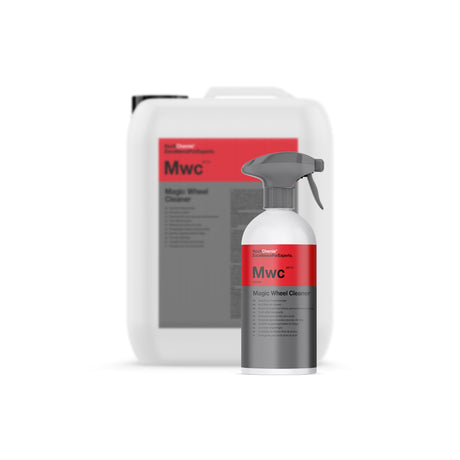


 Acid-free
Koch-Chemie
Magic Wheel Cleaner "Mwc" Wheel Cleaner
Acid-free wheel cleaner with color change for daily workshop use
In stock (10× 500 ml)Backordered (3× 10 liters)From 14,96€16,63€Contents: 500mlUnit price (29,92€ / l)Unavailable










Detailing101
View all-

Car fogging up on the inside: why a clean windscreen stays clear for longer
Daniel von Detailing1 |
-

Removing limescale spots from car windows without scratching the glass
Daniel von Detailing1 |
-

5 reasons your windscreen smears after summer
Daniel von Detailing1 |
-

What a car leather sealant protects and what it doesn't
Daniel von Detailing1 |
-

5 leather brush mistakes that roughen car leather
Daniel von Detailing1 |
-

Leather Steering Wheel Restoration: Recolour Worn Spots
Jasper von Detailing1 |
-

Leather seat care before winter: how to prevent cracks
Daniel von Detailing1 |
-

Remove Leather Discolouration: Jeans, Waxed Jacket or Skin Oil?
Daniel von Detailing1 |
-

How to spot genuine leather in your car: why the water drop isn't enough
Daniel von Detailing1 |
-

How to store tyres properly: why wheels go brown in storage and how to prevent it
Jasper von Detailing1 |
-

Car leather cleaner: mild or strong, and the dirt decides
Jasper von Detailing1 |
-

Tyre Dressing vs Rain: Spray, Gel or Coating, What Actually Stays on the Sidewall
Daniel von Detailing1 |


