






Tree sap on car paint — why water and microfiber are not enough
In April, the first spruces and maples start to bleed, a few weeks later the linden drips. Anyone who parks their car under one of these trees will find honey-yellow spots on the hood after two days, feeling like dried window glue. The first instinct is almost always wrong.
Tree sap is not surface dirt, but a terpene resin that polymerizes onto warm clear coat and can no longer be removed with pure water. Rubbing it off dry will engrave holograms into your paint for the next two years. The correct method requires a solvent with an orange extract base, two minutes of dwell time, and the right sequence.
April to June is sap season — and the clear coat notices it first
Tree sap is not juice or pollen, but a terpene resin that conifers secrete to defend wounds and which behaves like a thin, sticky film on paint.
In Germany, the main phase begins between mid-April and late June — first spruces and pines drip their resin from bark injuries and bud formations, then maple and linden follow with honeydew, a sugary aphid excretion that is similarly sticky. As soon as the daytime temperature exceeds 15 degrees Celsius, sap flows fluidly from the tree and lands on the hood, roof, and rear window as clear droplets that dry into yellow to amber spots.
What makes it dangerous for the clear coat is not the quantity, but the combination. A sap droplet on paint heated to 70 degrees Celsius hardens in about 90 minutes — and chemically bonds to the top clear coat layer. After 48 hours of sun exposure, etching will have formed, which remains visible as a dull shadow even after professional polishing.
The window for damage-free removal is shorter than for bird droppings and longer than for insects — around 5 to 7 days, provided the paint has not been exposed to the sun multiple times. The most critical area is the hood: here, engine heat from below mixes with sunlight from above, and the paint temperature on a clear day quickly reaches double digits above ambient temperature. Roof surfaces and rear windows are secondary, while the side panels are largely uncritical.
Tree sap can be identified by three characteristics: The droplets are clear to honey-yellow, show a slightly convex droplet shape instead of a flat crust, and they stick under the fingernail when rubbed. Pollen, on the other hand, appears grainy and can be tapped off dry; bird droppings have white edges and a firm, cracked crust. Those who can distinguish between the three will avoid the wrong first step and thus unnecessary polishing.
Our 48-hour article on insect removal explains the principle of acid etching in clear coat — with sap, the mechanism is similar, only with terpene resin adhesion instead of formic acid corrosion.
Resin polymerizes with the clear coat — that's why water fails
Terpene resin consists of long-chain hydrocarbons that are nonpolar. Water is polar. The two substances do not mix, no matter how hot the water is or how long you soak it.
That's why a fresh snow foam pre-wash with clear water and pH-neutral foam looks like this: The paint is clean, but the sap drops are still there. The high-pressure cleaner removes the dirt layer, but the sap spots remain — because the water runs off around them without dissolving them. The same applies to car shampoo, quick detailer, and all water-based products.
What works is a solvent based on orange extract. D-Limonene, the main active ingredient from citrus peel oil, is nonpolar and dissolves nonpolar substances such as resin, adhesive residues, tar, and rubber by chemically embedding itself and breaking up the cross-linking. The Koch-Chemie Orange Power uses exactly this mechanism — the product is approved for solvent-resistant surfaces such as paint, glass, ceramics, and metal, and is considered a standard tool in workshops for adhesive residues after foil removal.
There is a stark difference between Orange Power and classic solvents like mineral spirits or isopropanol: D-Llimonene does attack wax and ceramic sealants, but much slower and more controlled than aromatic solvents. This allows for short, local application on a sealed paint, without removing the entire protective layer.

The 3-minute method: spot, soak, remove
The correct procedure for sap infestation is a four-step process that takes no longer than 3 minutes per affected area and protects the paint from mechanical abrasion.
Step one: The vehicle must be in the shade and the paint surface below 25 degrees Celsius. On hot paint, the solvent evaporates in seconds before it can work, leaving streaks. If the car is in the sun, rinse it beforehand with clear water and wait until the metal surface is lukewarm again.
Step two: Spray Orange Power sparingly directly onto the sap drop — not on the surrounding area, but precisely. For small droplets, half a pump stroke is sufficient; for larger spots, two to three sprays. The solvent begins to work immediately, which can be seen by a slight color change in the sap spot.
Step three: Allow to dwell for 2 to 3 minutes, do not help, do not rub. The sap dissolves from the outside in — if you wipe too early, you will drag partially dissolved sap residue across the paint and spread it over the surface. In cases of heavy resinification, a second spray after the first dwell time is more effective than waiting longer.
Step four: Gently wipe off with a clean microfiber cloth in one direction — do not circular, do not rub, do not wipe back. Then wipe the area dry with a second, fresh cloth or re-wash the entire surface with a snow foam pre-wash followed by contact shampoo. The Gentle Snow Foam with pH 7.5 neutralizes the orange extract residue and prepares the surface for a two-bucket contact wash with Koch-Chemie Car Shampoo.
Detailing1-Insight: Do not store the Orange Power bottle in a cool place. At room temperature, the viscosity is ideal; in the cellar below 15 degrees, the product becomes thick and sprays unevenly — then too large drops form, which run into the gaps and are difficult to remove there. On the day of application, take it out of the garage 30 minutes beforehand if the workshop is colder than the vehicle. This trick is not in any data sheet.
Orange Power, Snow Foam, drying towel — that's all you need
A complete toolkit for sap removal and post-wash consists of four products, which together cost under 70 Euros and are sufficient for 20 to 30 applications.
The first product is the solvent sprayer. Orange Power comes as a 500ml spray bottle with a pre-assembled nozzle and is approved by the manufacturer for adhesive residues, tree sap, rubber, tar, oil, and chewing gum on solvent-resistant surfaces such as paint, glass, ceramics, and metal. A bottle lasts for about three years with normal use — two to three sap removal uses per season on one vehicle.
The second product is the snow foam pre-wash for large-area post-washing after spotting. Gentle Snow Foam works at a pH of about 7.5 and, according to the product page, forms a dense, long-lasting foam carpet that loosens loose road dust and pollen without attacking wax layers or ceramic coatings. The dosage is 20 ml per 1 liter of water in the foam lance — about 1:50, which corresponds to two pump fillings for a 1-liter lance.
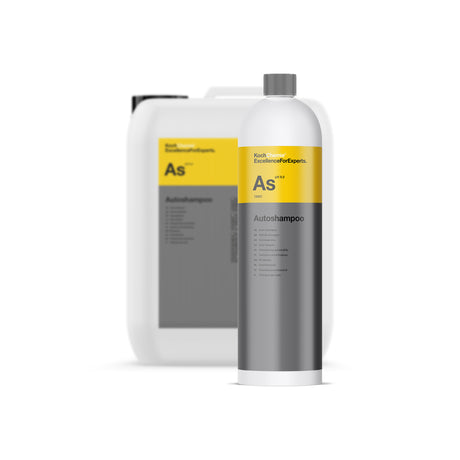
The third product is the pH-neutral contact shampoo for the two-bucket wash. Car Shampoo is phosphate and NTA-free, suitable for biological wastewater treatment plants, and works in gantry car washes, car wash tunnels, and hand washes. A 1-liter bottle is sufficient for about 50 contact washes at the recommended dosage.
The fourth product is the drying towel. A Twisted-Loop drying towel with 1500 GSM from the 70/30 microfiber blend absorbs extreme amounts of water according to the data sheet and reduces the risk of drying holograms due to shorter contact paths. Once you've held it, you won't put a normal terry cloth on your paint again. The price difference between a cotton towel and a Twisted-Loop towel pays off with the first avoided polishing pass.

What doesn't work: water, WD-40, hot blow-drying
Around tree sap, there are home remedies that are either ineffective or cause consequential damage — the most common three mistakes cost more paint than the sap itself.
Mistake one is hot water. The assumption that heat softens sap is true — but only briefly, and while the sap is soft, it spreads over a larger area with each wipe. In addition, hot water shocks the clear coat, which can cause water ingress and subsequent paint chipping in vehicles with fine hairline cracks. Cold clear water doesn't work, hot water causes additional damage.
Mistake two is WD-40. The mineral oil-based product does dissolve sap, but leaves a greasy film that removes wax and ceramic sealants and then needs to be removed with an IPA wipe. If you don't have IPA at hand, you will only partially remove the WD-40 with snow foam and drive for the next four weeks with paint on which water runs flat instead of beading. The sealant is gone, the sap rarely completely.
Mistake three is the hairdryer or direct sun. Both heat the paint above 40 degrees Celsius and cause the sap to penetrate deeper into the clear coat pores. After cooling, the droplet is no longer on top, but in the paint — a polishing workshop charges three to four figures for such an embedment, depending on the area.
Mistake four, more common than all others combined: The fresh sap stain is rubbed off with a dry cotton handkerchief. Cotton fiber is hard against clear coat, and every rubbing movement leaves micro-scratches that appear as spiderweb patterns in sunlight. Without a solvent, no cloth belongs on a sap stain — neither microfiber nor paper, neither dry nor wet.
Mistake five is the paper towel. What works for spilled oil in the household has no place on clear coat: The cellulose fiber has a rougher surface than cotton and also lime residues from the production process, which act abrasively. Anyone who has wiped a hood with a paper towel and then checked it against the light will see the pattern of the rubbing movement as a fine wash scratch grid.
A final warning applies to aggressive adhesive removers from the hardware store shelf. Products containing acetone, butyl acetate, or xylene reliably dissolve sap — and with it wax, ceramic sealant, and in the worst case, the top clear coat layer. If a data sheet states "do not apply to painted surfaces," it is there for precisely this reason. D-limonene from citrus extract works slower, but without paint collateral damage.
Parking, pollen, prevention — how to keep your paint clean
The best long-term sap care is not removal, but avoiding the situation — and a sealant that makes it difficult for the sap to come into contact with the clear coat surface.
Parking choice is the first lever. From May to June, spruces, pines, and lindens drip particularly heavily — if you consistently park under these trees, you will find new drops every three to five days. Moving your car three meters under the open sky halves the infestation; a garage or carport eliminates it. If evasion is not possible, a car cover reduces contact and makes nightly dew formation on the paint uncritical.
The second lever is a fresh preservation. An SiO2 spray sealant fills the surface pores of the clear coat with a thin, quartz-containing layer and increases the contact angle of water and oily liquids. Sap droplets do not bead off, but they penetrate less deeply and can be removed much faster after 48 hours with Orange Power — in workshop experience, the dwell time between sealed and unsealed paint differs by a factor of two to three.
The third lever is routine washing. Anyone who performs a snow foam pre-wash with pH-neutral foam every ten to fourteen days and then washes with car shampoo will remove fresh sap droplets before they polymerize. A weekly check of the hood and rear costs 30 seconds — which quickly pays for itself with every saved polishing pass.
Between two main washes, the Wash & Finish Quick Detailer is worthwhile, formulated as a waterless wash detailer that removes light dirt particles and fresh pollen streak-free. Sap in an advanced state is too much for Quick Detailer — for that, Orange Power is needed — but as an intermediate care on otherwise clean paint, the waterless detailer saves a full wash.

No time for the whole post? Get it summarized:
Add Detailing1 as a preferred source on Google


