



Sunday, April 5th. It's lightly raining, the sky is grey, and the wind is blowing at over 8 meters per second across the yard. Not exactly car washing weather — or so it seems. But if you look at the forecast, you'll see something exciting: it will clear up starting Tuesday, with three days of sunny weather and temperatures up to 15 degrees Celsius heading our way. This isn't random weather; it's a window. Exactly the kind of window experienced detailers wait for — and one that most people miss because they're looking at the wrong day.
The mechanics behind it are simple: after continuous rain, the paint is covered with water, pollen, brake dust, and road film. When the sun comes out, this cocktail dries on the clear coat and practically bakes itself on. You could wash it from Monday evening onwards — but also before then. And that's the trick of this post: it's not just about washing. It's about using the window to protect your paintwork for the next few weeks. Because from April onwards, the toughest time of the year begins for paintwork — pollen, UV radiation, the first hot days, tree sap. And the protection you apply now will determine how your car looks in August.
Why exactly now — and not next week?
The temperature range between 10 and 18 degrees Celsius is the sweet spot for most car care products. Spray sealants, quick detailers, and even many ceramic boosters require these mild conditions to cure correctly. If it's too cold, the solvent evaporates too slowly, and the sealant remains streaky. If it's too hot, the product flashes off before you can properly spread it – leaving streaks. This is exactly what happens in July on sun-drenched paintwork at 35 degrees: you apply it, pull back the cloth, and the residue has already dried. Now in April, however, the conditions are almost laboratory-like: 13 to 15 degrees, partly cloudy, partly sunny, no strong wind after Monday. This is sealing weather.
Then there's the pollen factor. According to the pollen information service, birch pollen is currently at peak levels, with high concentrations recorded on dry, windy days in many regions of Germany. Birch pollen isn't just an allergy problem – it contains enzymes that, in combination with UV light and heat, can attack the clear coat within 24 to 48 hours. This is why many cars suddenly appear "spotty" from April onwards, even though the owner washes them regularly. The solution isn't more frequent washing. The solution is a protective layer between the pollen and the clear coat – exactly what a spray sealant provides.

First wash, then seal — the process that works
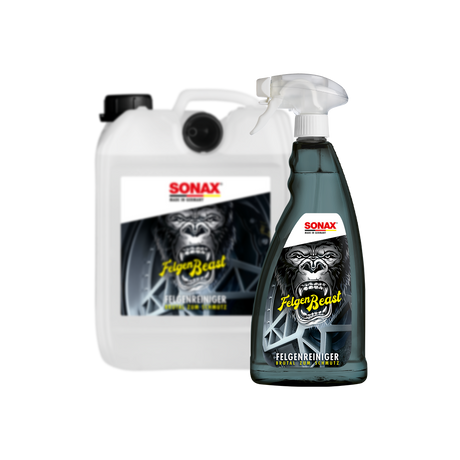
This is where the most common beginner's mistake is made: spraying sealant on dirty paint. This binds dirt and brake dust, resulting in a shiny but scratchy surface. Any sealant is only as good as the decontamination that came before it. The process for the upcoming weather window looks like this: Ideally, on Monday or late Tuesday, a classic two-bucket wash — with a pH-neutral shampoo like the SONAX XTREME Rich-Foam Shampoo, which provides a stable, lubricious foam and doesn't attack an existing sealant. If you have a foam cannon, apply a pre-wash with a snow foam beforehand — the Koch-Chemie Gentle Snow Foam Gfx is pH-neutral and removes the coarse film before the wash mitt even touches the paint. This drastically reduces scratches, especially on dark paintwork.
After rinsing and drying, the crucial step comes. The paint is now in the condition it should remain in for months — clean, bare, receptive. This is the window for sealing. And this is where those who want serious protection separate themselves from those who just want it "washed."

Spray Sealant: 10 minutes of effort, 6 to 12 weeks of protection
A spray sealant is essentially a condensed version of a ceramic coating, adapted for easy application without masking or flash time control. It is sprayed onto slightly damp or dry paint, spread with a fresh microfiber cloth, and polished with a second cloth. The result is a thin but dense protective layer of SiO₂ or polymer compounds that repels water, makes contamination more difficult, and shields the clear coat from UV degradation and pollen enzymes. Durability, depending on the product, ranges from 6 weeks to 3 months — significantly longer with regular washing.
For those who want a true ceramic character, the GYEON Q²M Cure is the choice. This product is a spray sealant with a high SiO₂ content and has long been the benchmark for coating manufacturer quality in easy application. Its hydrophobicity is aggressive, the beading spectacular, and its durability realistically 2 to 3 months. Yes, the product smells chemical — that's unavoidable with a true SiO₂ booster. And yes, it's more expensive than a classic spray wax. But anyone who has seen a black car sealed with Cure in the rain will understand why this category exists.

Quick Detailer — what it is, what it isn't
The term Quick Detailer is often misused. A Quick Detailer is not a substitute for a sealant, but rather a care spray: It cleans superficially, visually fills in small micro-defects, and refreshes an existing sealant. Its strength is the lubricating film — it reduces friction if you want to wipe over the paint with a cloth, for example, without risking scratches. You use it after a quick wash, after a dusty day, after drying instead of a chamois. However, it does not replace genuine protection.
The Koch-Chemie Finish Spray Exterior „Fse" is the classic in this category. It contains Kalk-EX — i.e., ingredients that dissolve water spots and lime haze on the surface, which is invaluable after drying with hard tap water. For vehicles with an already applied ceramic sealant, there are special ceramic detailers like the SONAX XTREME Ceramic QuickDetailer, which, in addition to the cleaning effect, also incorporate fresh SiO₂ into the existing layer. This measurably extends the durability of the main sealant — provided the underlying coating is intact.

For Coating Owners: The Booster Makes the Difference
If you already have a professional ceramic coating on your vehicle — whether self-applied or professionally done — you should use this week to refresh the layer. A well-maintained 3-year coating doesn't last three years because the SiO₂ is magical, but because the owner regularly maintains it with a suitable booster. The CarPro Release was explicitly developed for this application: a post-coating protection spray that is applied directly to the existing sealant, reactivates the hydrophobicity, and places a second, sacrificial layer over it. It's not cheap — but compared to the cost of a complete re-sealing, it's the smartest investment for any vehicle with a coating.
The application method is identical to any other spray sealant: spray onto clean, slightly damp paint, spread thinly with a microfiber cloth, and gently polish with a second cloth. 10 to 15 minutes per vehicle — done. No masking, no flash time stopwatch, no fear of streaking.

What you should still do today
If you're reading this on Sunday evening, you still have time. Tomorrow, Monday, is the last overcast day before the high pressure system — perfect for washing in the carport or garage without direct sun on the paintwork. On Tuesday morning, apply the spray sealant before the vehicle goes back into the sun. By Thursday, the layer will have fully cured — then it will protect you through the pollen season, the first tree sap in May, and the first warm days in June. Three hours of effort now, three months of peace afterwards. Not a marketing promise, but material chemistry.
Anyone who misses the moment and only reacts in June will be working against ingrained pollen and UV-damaged clear coat — and will then need not a spray sealant, but a polish. And that's a completely different topic.
No time for the whole post? Get it summarized:
Add Detailing1 as a preferred source on Google